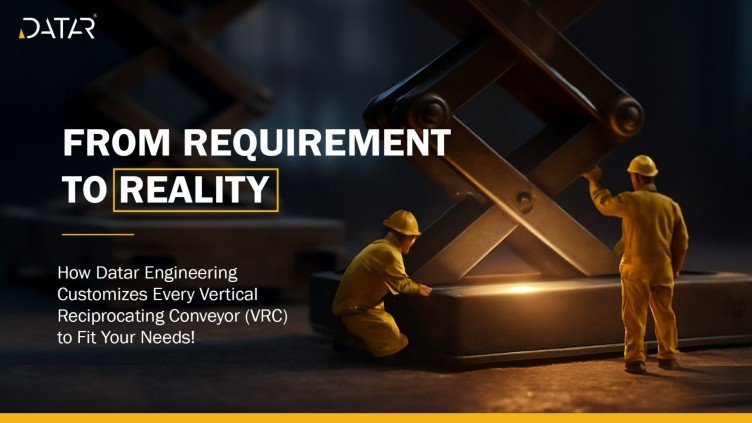
The Weight We Carry In every factory floor, automobile showroom, warehouse, catering industries and e commerce there’s an invisible story unfolding every minute — the story of movement. Materials, machines, trays, containers, and vehicles are constantly in motion, lifted and shifted by people, pulleys, or platforms. For decades, this motion has been powered more by manpower than by mindful design.
But as industries evolve, the cost of unsafe or inefficient material handling has grown too large to ignore. The risk of back injuries, slips, spillage, or even fatigue doesn’t just affect the individual worker — it ripples into lost productivity, lower morale, product damage, and rising insurance costs.
This is where ergonomic engineering steps in — the science of designing equipment that adapts to the human body, not the other way around. And at the forefront of this transformation in India stands Datar Engineering & Consultancy Pvt. Ltd., a company built on one belief: efficiency and safety must rise together.
For over two decades, Datar Engineering has been reimagining how industries lift, transport, and manage heavy loads. Their ergonomic vertical lifting systems — whether for automotive, e-commerce, or manufacturing — are not just machines; they’re human-first engineering solutions.
Understanding the Challenge — Where Manual Meets Risk
Material handling is one of the most physically demanding aspects of industrial operations. According to workplace safety studies, a significant portion of reported injuries in manufacturing and warehousing stem from improper lifting or repetitive strain. In India, where small and mid-sized enterprises still depend heavily on human labor, the problem is even more pronounced.
The Real-World Impact of Non-Ergonomic Practice
- Injuries and fatigue: Workers lifting heavy materials repeatedly without support suffer from musculoskeletal disorders, chronic back pain, and fatigue — reducing both efficiency and lifespan of employment.
- Product damage: In manufacturing environments, spilled or damaged items due to improper lifting can lead to waste and loss of product integrity.
- Inefficient workflows: Without mechanized systems, material transport becomes a bottleneck, slowing down operations.
- Safety risks: In manufacturing and automotive environments, improper lifting methods can lead to serious accidents or equipment damage.
The Ergonomic Revolution — Designing for Humans, Not Just Loads
Datar Engineering’s philosophy of “human-first engineering” places ergonomics at the core of every design. Unlike generic lifts, which prioritize load-bearing capacity alone, Datar’s ergonomic lifts are engineered around the operator’s safety, comfort, and environment.
- What Is Ergonomic Engineering?
Ergonomic engineering studies how people interact with machines and workspaces. It ensures that designs minimize physical effort, prevent injury, and improve overall comfort. In material handling, this translates to:
- Optimal platform heights and controls that reduce bending or stretching.
- Smooth acceleration and braking systems that prevent jerks or spillage.
- Safety interlocks (poka-yoke design) that prevent errors like door opening mid-lift.
- Noise, vibration, and shock reduction for a quieter, steadier experience.
2.Datar’s Ergonomic Design Approach
Every Datar lift begins not on a drawing board but on the client’s site. The team studies:
- Load characteristics: What is being lifted — containers, vehicles, or goods?
- Frequency and height: How often is it lifted? Across what floors?
- Human interaction: Who operates it? How trained are they?
- Environment: Indoor or outdoor, temperature, space constraints, flooring.
This holistic analysis ensures each lift is customized — not just built. The goal is not to make humans work around machines, but to make machines work around humans
3.The “Poka-Yoke” Edge
Borrowed from Japanese manufacturing philosophy, poka-yoke means “mistake-proof.” Datar incorporates poka-yoke design into every product:
- Limit switches and overload sensors prevent misuse.
- Auto-locking doors ensure safety during operation.
- Motion sensors detect human presence and halt movement to prevent accident.
- Emergency stop features and interlock systems add layers of redundancy.
This results in equipment that operates smoothly, safely, and intuitively — empowering even non-technical users to handle heavy materials with confidence.
Real-World Applications — Lifting Industries to New Heights
Manufacturing: Lifts That Handle the Load Efficiently and Safely
In manufacturing environments like the MRF factory canteen, the safe movement of heavy containers, materials, and food supplies is critical. Traditional manual lifting methods posed significant safety concerns for staff working long shifts, resulting in fatigue and potential injuries.
Datar’s Solution:
A customized, ergonomic lift designed specifically for the MRF factory canteen moved heavy trays and containers without the need for manual handling. Features like anti-jerk motors, smooth acceleration, and platform stability ensured that the risk of spills and injuries was minimized while also improving overall speed and efficiency.
The outcome was a marked improvement in worker safety and productivity. The canteen staff could focus on their tasks without the constant worry of physical strain, and the entire workflow became more efficient.
Automotive: Lifts That Protect Machines — and the People Who Move Them
In automobile showrooms, aesthetics are as important as safety. Moving bikes or cars between floors manually is risky — both for the product and the staff.
Datar’s Solution:
A glass-panelled vertical lift with soft-stop controls, balanced platforms, and concealed wiring.
Outcome:
- Zero damage across hundreds of transfers.
- Seamless visual integration into showroom design.
- Improved customer perception of brand quality.
For a leading automotive brand, Datar engineered a lift that safely transported motorcycles between showroom floors, protecting the product while ensuring that staff worked in a comfortable, ergonomic environment.
Construction: Lifts That Carry the Load — and Care for Laborers
Construction sites are dynamic, high-risk environments. Manual lifting of bricks, cement, and steel bars leads to exhaustion and frequent accidents.
Datar’s rugged construction lifts:
- Use heavy-duty material for outdoor endurance.
- Have reinforced platforms for uneven loads.
- Integrate anti-fall brakes and overload sensors.
- Reduce dependency on manual hauling by 60%.
A Mumbai-based construction company significantly reduced project completion time and eliminated lifting-related injuries with Datar’s custom construction material lifts, demonstrating that safety and efficiency go hand-in-hand.
E-Commerce & Warehousing: Speed, Safety, and Scalability
The rise of e-commerce demands lightning-fast movement of inventory. Manual movement across mezzanine floors often slows down operations and risks product damage.
Datar’s Solution:
A space-efficient VRC (Vertical Reciprocating Conveyor) with adaptive load sensors and modular design.
Outcome:
- Faster throughput.
- Zero product damage.
- More efficient warehouse operations.
A major e-commerce warehouse saw vast improvements in operational flow with Datar’s tailored lift solutions, reducing bottlenecks in high-traffic areas and ensuring a smoother product movement process.
The Human Advantage — When Ergonomics Meets ROI
The value of ergonomic lifts extends far beyond safety. It’s about creating workplaces where humans feel secure, supported, and enabled.
1. Tangible Benefits
- Reduced Fatigue: Operators can work longer, safer hours without physical strain.
- Increased Productivity: Faster turnaround time and smoother workflows.
- Lower Attrition: Workers feel safer, leading to higher retention.
- Fewer Incidents: Reduced compensation claims and downtime.
- Better Product Integrity: No spillage, dents, or damage during movement.
2. Intangible Returns
- Trust & Morale: A culture of safety builds confidence and pride among teams.
- Brand Reputation: Clients and partners value reliability and responsibility.
- Long-Term ROI: Ergonomic systems last longer and require minimal maintenance.
Beyond Installation — Training, Maintenance, and Continuous Care
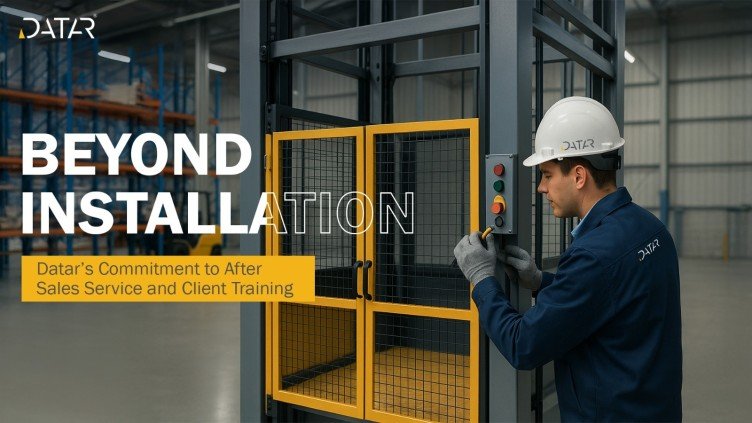
Datar’s engagement doesn’t end when a lift is commissioned. The company’s after-sales service philosophy ensures that every lift remains as safe and efficient as day one.
1. On-Site Training
Operators receive hands-on guidance in safe operation, loading protocols, and emergency procedures. Training manuals and visual SOPs ensure even new employees can learn quickly.
2. Scheduled Maintenance
Regular safety audits, oil checks, sensor calibration, and door interlock inspections prevent long-term wear and tear.
3. Feedback Loops
Datar stays in constant touch with clients to collect feedback, monitor performance, and implement small ergonomic upgrades where necessary.
4. Building Long-Term Partnerships
Over 80% of Datar’s clients return for repeat projects or referrals — a testament to the company’s culture of trust and human connection.
The Future of Ergonomic Lifting — A Safer, Smarter India
India’s industrial landscape is shifting rapidly. As automation and digitalization advance, ergonomic design will be the silent differentiator between efficient and unsafe workplaces.
With a focus on poka-yoke design, continuous innovation, and people-first engineering, Datar Engineering is not just building lifts — it’s lifting the standards of industrial safety and human welfare in India.
Conclusion: Elevating More Than Just Loads
Every successful industry depends on one thing — its people. By designing lifts that protect, empower, and enable those people, Datar Engineering redefines what it means to lift efficiently and safely.
In a world racing toward automation, Datar reminds us that true innovation begins with empathy. Machines may move materials, but it’s design that moves people — and that’s where ergonomic engineering truly shines.